Launch offer — valid today only

📄 Digital book in PDF · read it on your phone or print it

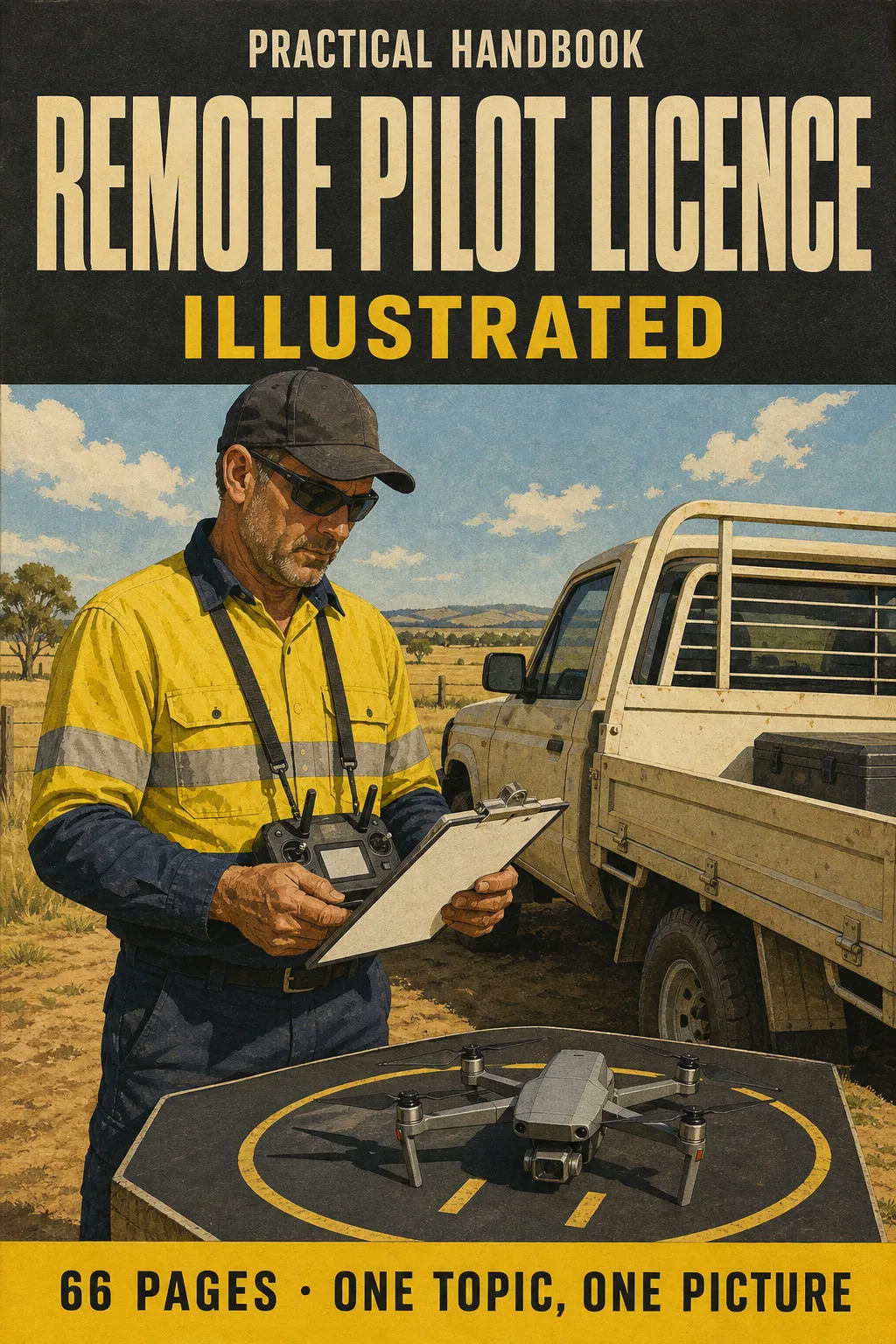
Remote Pilot Licence Illustrated: Your RePL Theory in Drawings One Topic on Every Page

Flight rules in metres, airspace steps, chart symbols, METARs, wind in knots and km/h, LiPo batteries, the pre-flight check and emergencies. Every topic has its own page: the drawing first, then what you need to remember. 66 illustrated pages.

GET THE ILLUSTRATED REPL BOOK

🔒 Secure checkout · PDF by email · 30-day guarantee

Every topic, its own pageEach rule and procedure drawn, with the explanation beside it
66 illustrated pages9 parts, from the licence and the rulebook to assessment day
Up-to-date sourcesCASR Part 101, the Part 101 MOS and current CASA guidance
PDF by emailFormat

Look Inside the Book

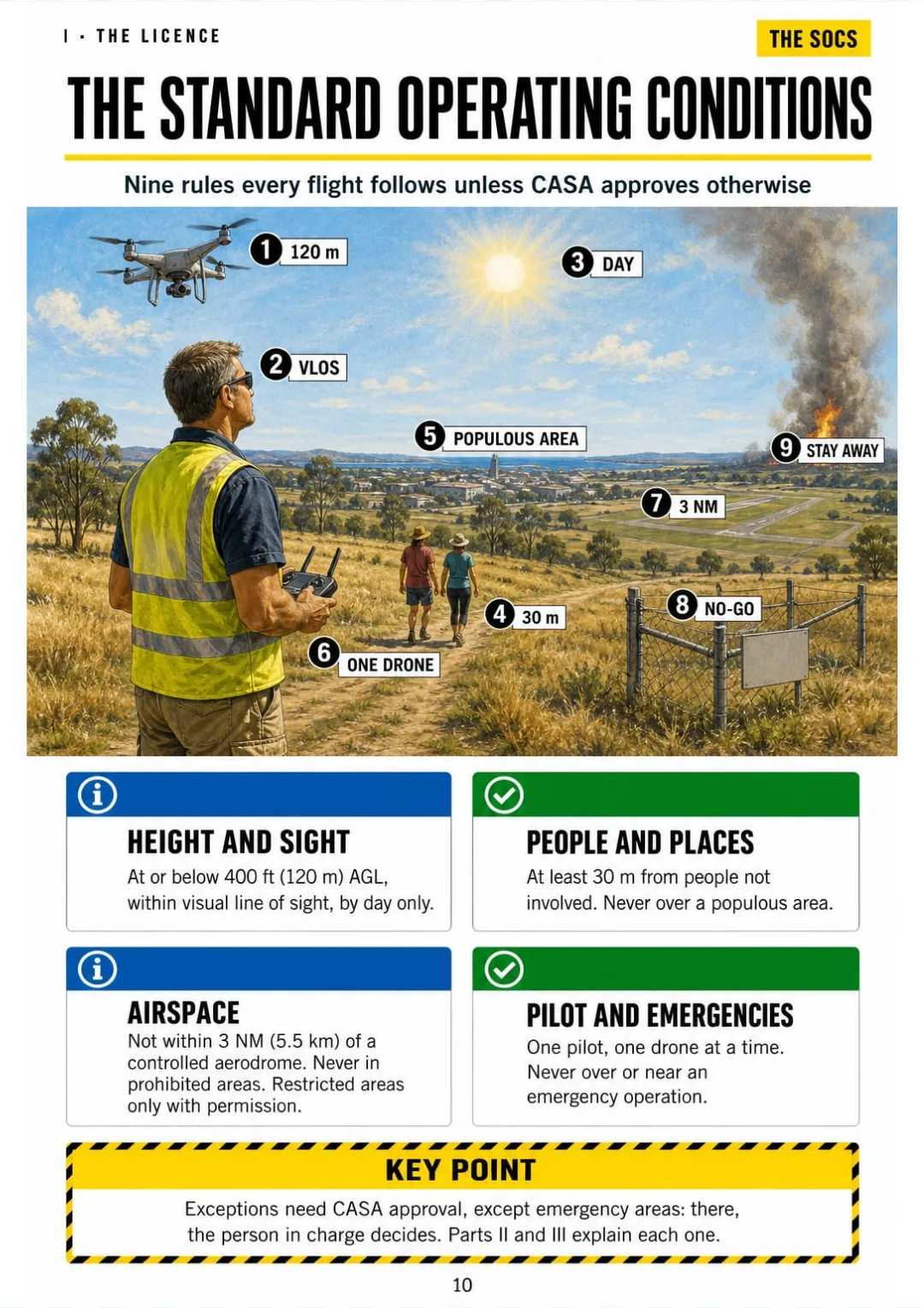
Every page has a big drawing and a box with the distances, numbers and steps you need to know:

120 m · VLOS · day · 30 m · not over populous areas · 3 NM · one drone · no-go areas · no emergencies
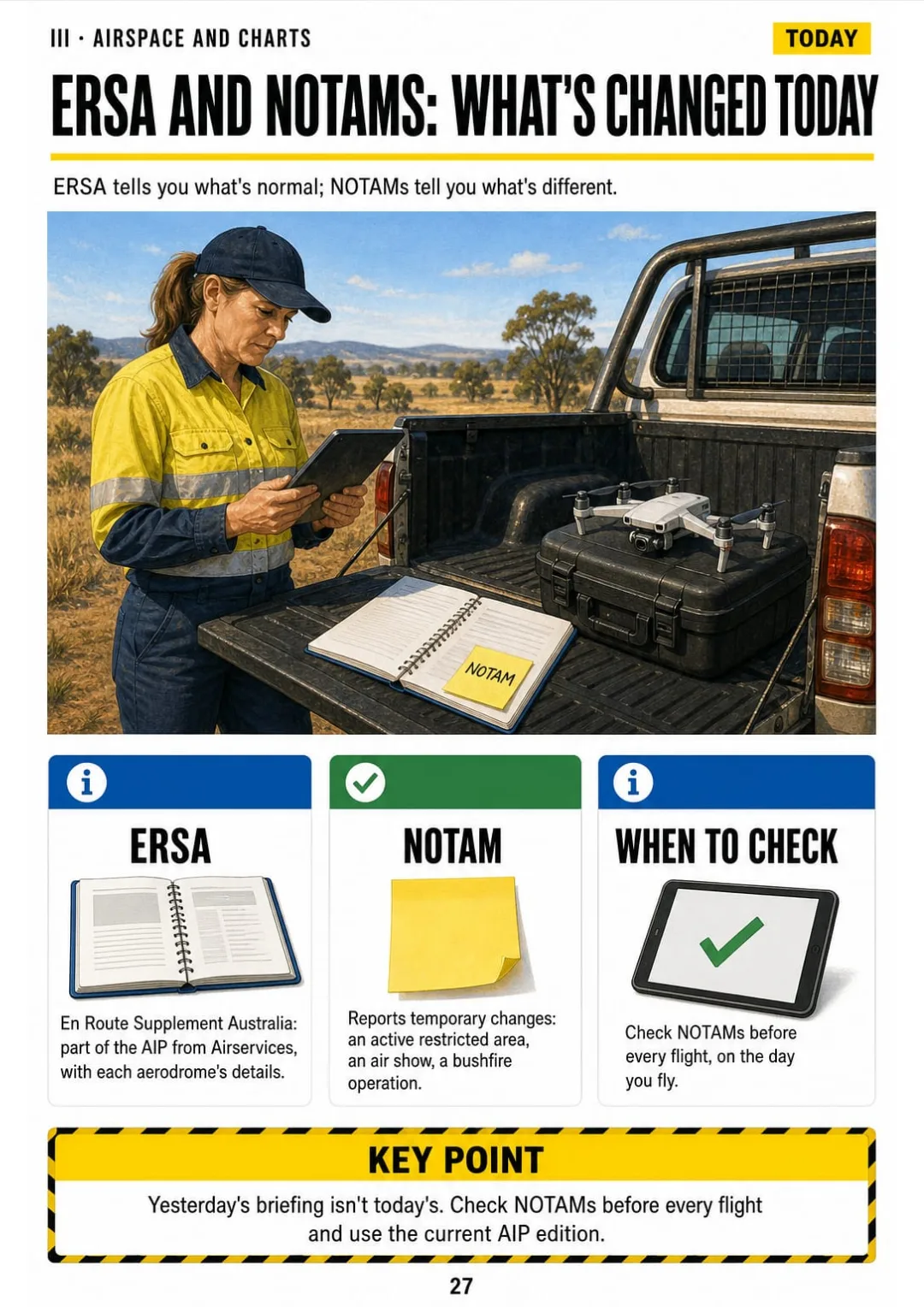
NOTAMs report temporary changes and are checked before every flight.
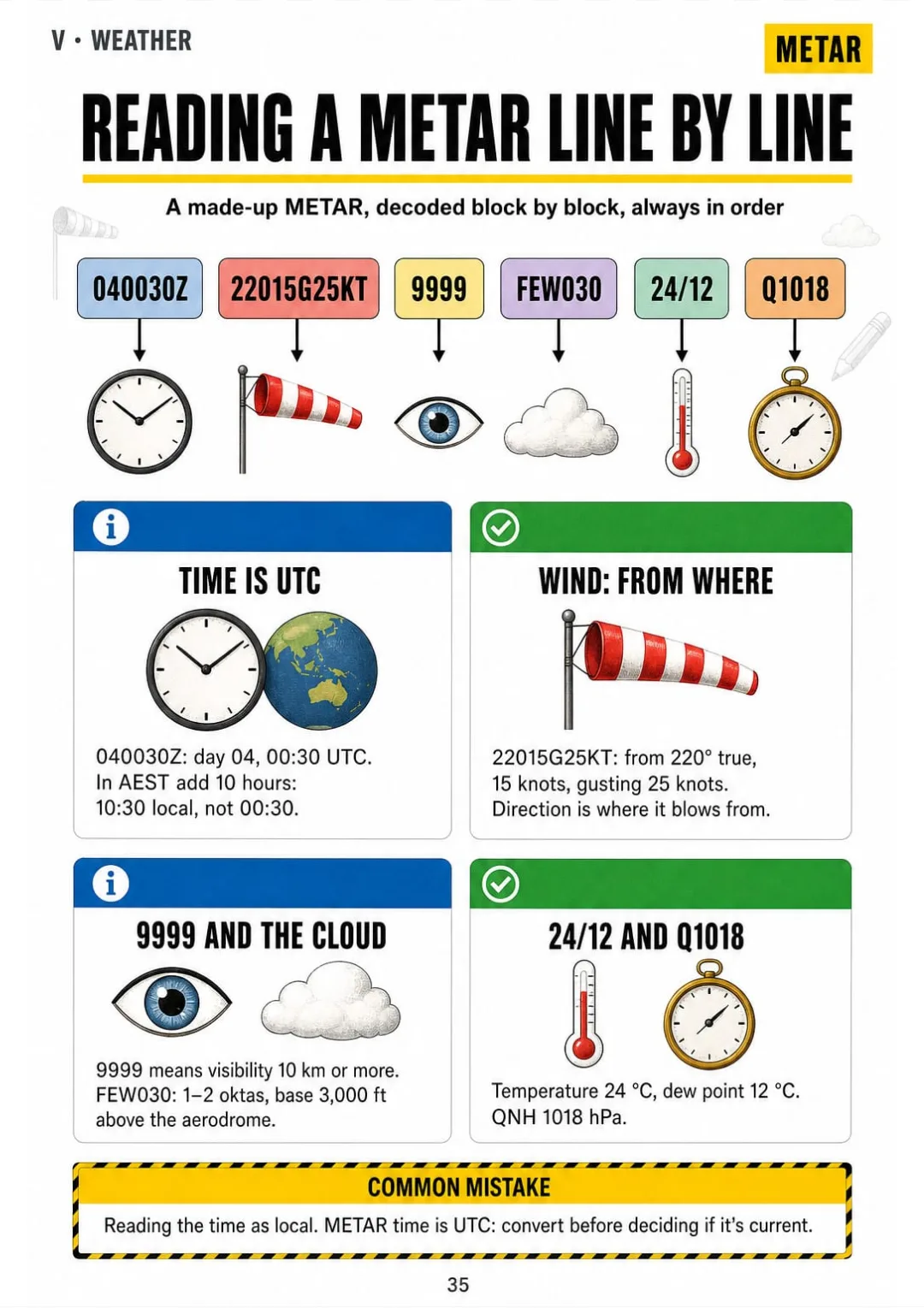
METAR decoded: aerodrome, UTC time, wind, visibility, cloud, temp/dew point, QNH.
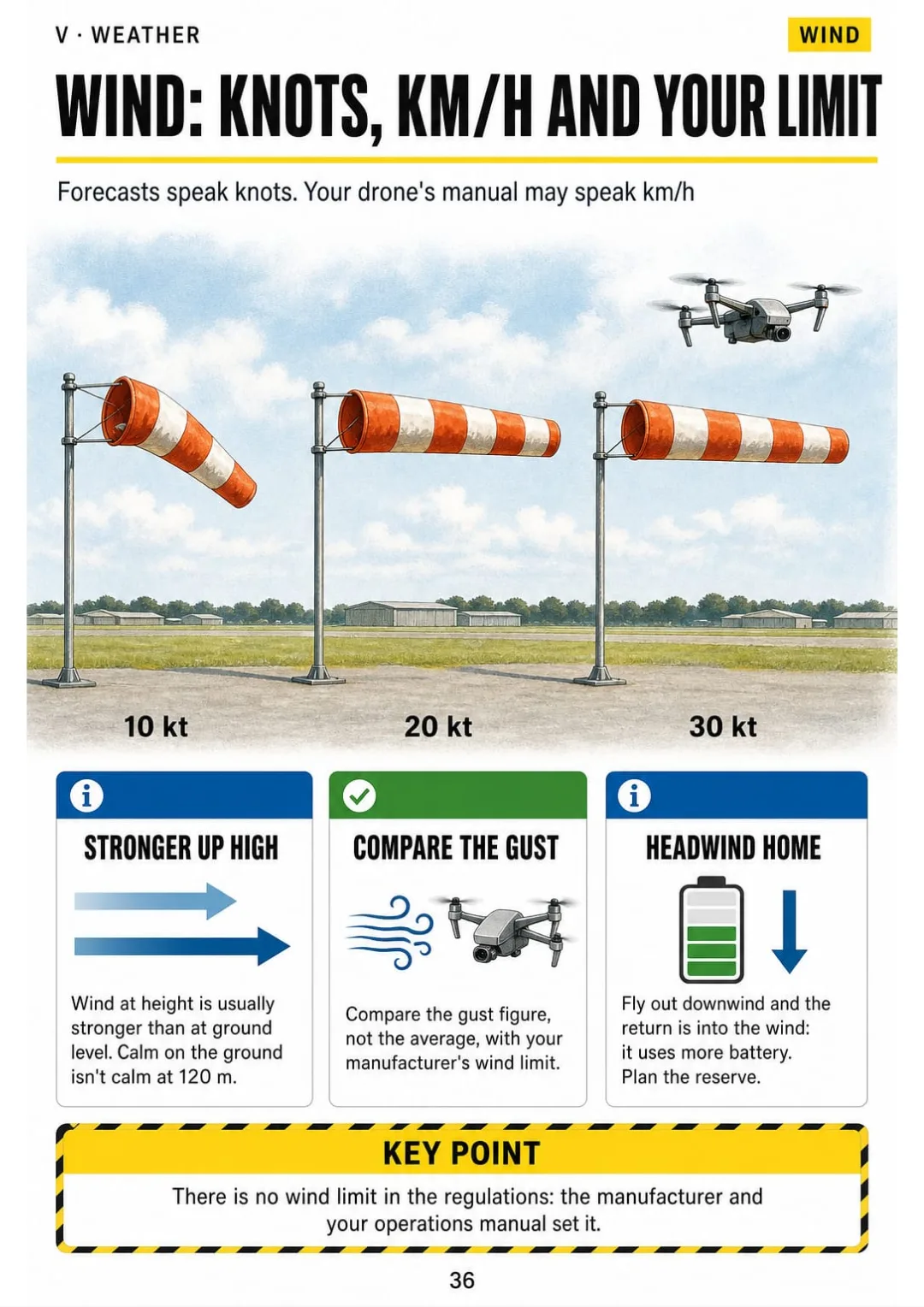
1 kt = 1.852 km/h: 20 kt is about 37 km/h. Compare gusts, not averages.
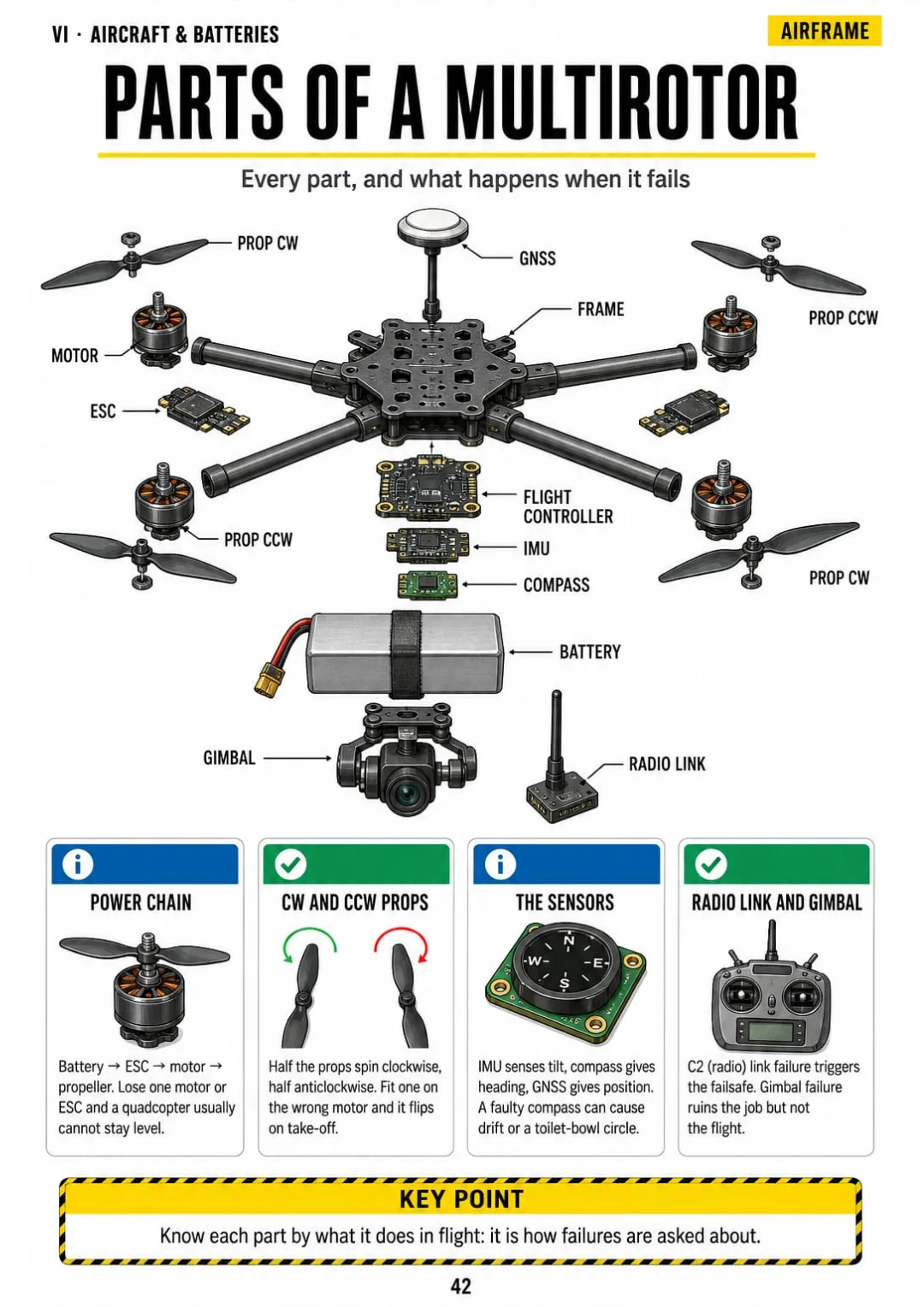
12 labelled parts, from the ESC to the compass, with one failure each
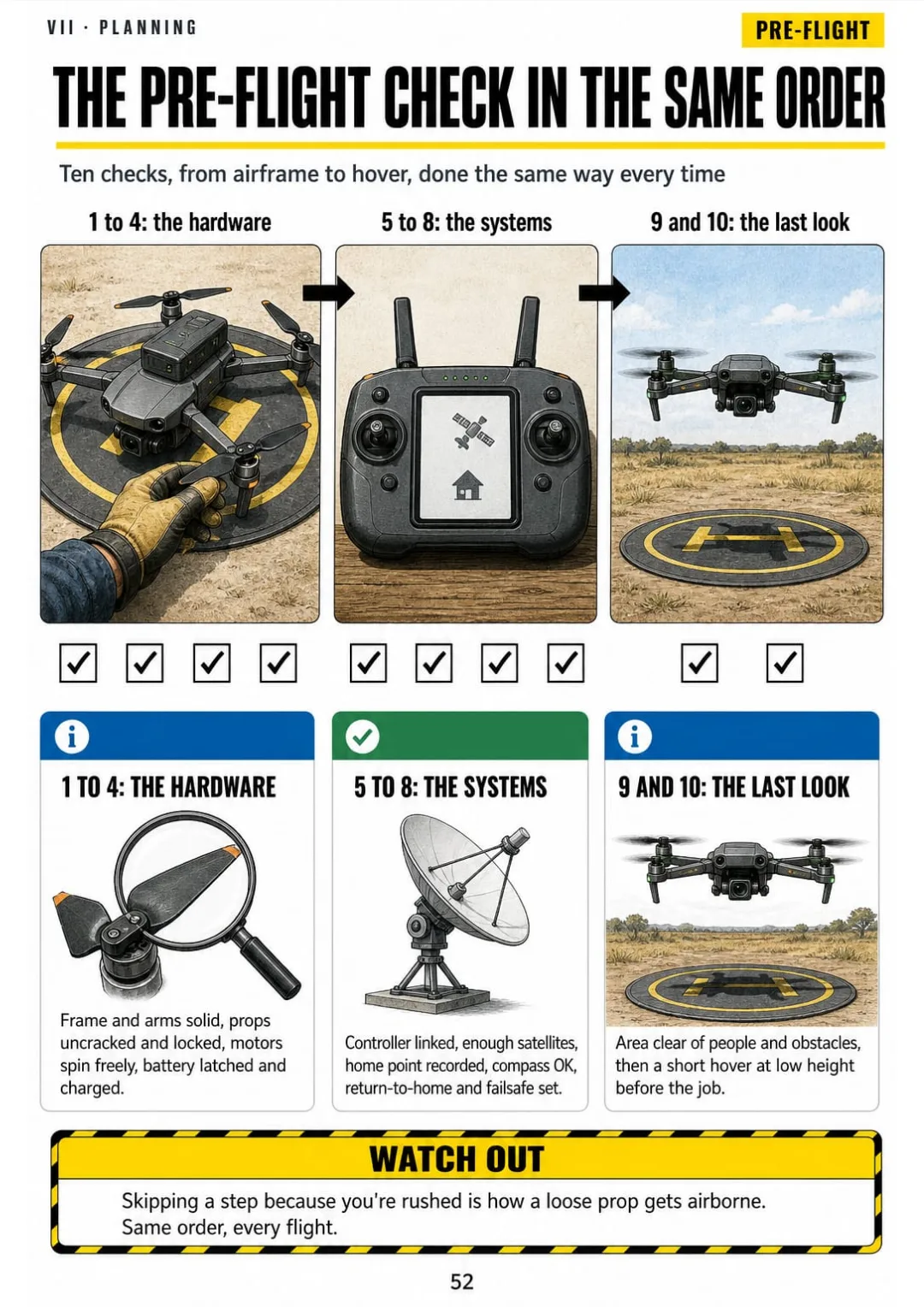
Ten numbered pre-flight checks: frame, props, motors, battery, link, GNSS, compass, RTH, area, hover
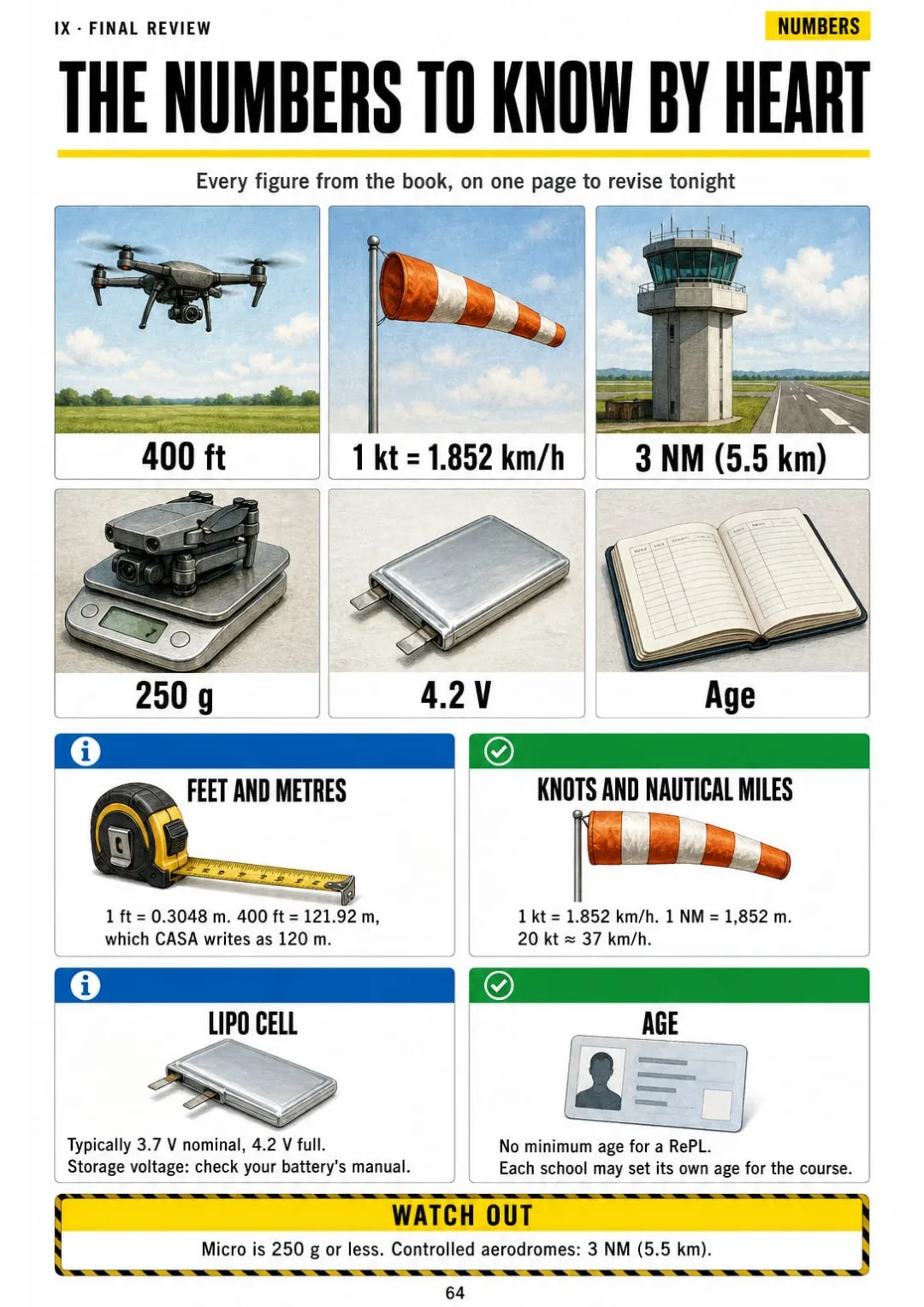
120 m · 30 m · 3 NM · 0.75 NM · 45 m (≤250 g) · 250 g / 2 kg / 25 kg / 150 kg · 5 h · 72 h
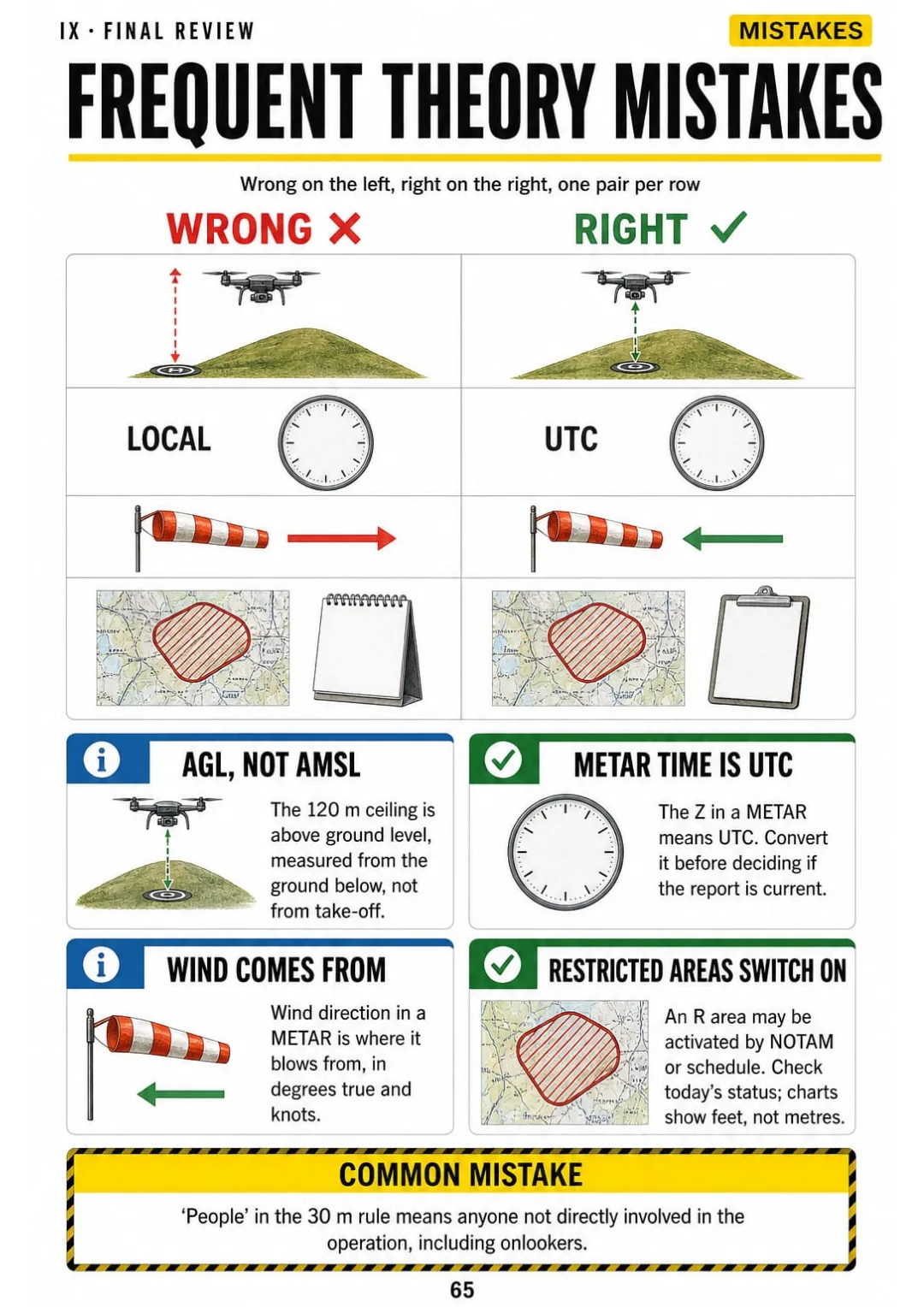
AGL vs take-off height, UTC, wind 'from', R areas and the 30 m rule

Swipe to see more →

These are real pages from the book. The table of contents is the full one: 9 parts and 62 topics.

The Problem Isn't You. It's How It Was Explained.

You're in the theory exam with a METAR in front of you: YBBN 210030Z 16012G22KT 9999 FEW025 24/16 Q1018. The question asks if the wind is within your drone's limit.

You read the weather chapter last week. But it explains each group in a paragraph, one after another, and on the exam paper the whole line turns back into code.

METAR decoded: aerodrome, UTC time, wind, visibility, cloud, temp/dew point, QNH.

In the book, that same METAR is drawn line by line: each group in its own box, with its label underneath. Aerodrome, UTC time, wind, visibility, cloud, temperature and dew point, QNH.

The same goes for wind in knots and km/h, airspace steps, the pre-flight check, lost link and LiPo voltages: each one has its own page.

You find the wind group, read the gust, convert it and answer, without going back to the manual.

COMPARE FOR YOURSELF

Same Topic, Two Ways to Study It

THIS
  • The manual: line after line
  • Airspace steps explained only in words
  • You walk into the exam still unsure
Controlled airspace in the vicinity of a controlled aerodrome is generally arranged as a series of steps, each defined by a lower limit expressed in feet and depicted on the relevant visual navigation chart. Prior to operation, the remote pilot must determine whether the intended area lies beneath the lower limit of a given step or within it, having regard to the maximum operating height above ground level. Operations within 3 nautical miles of a controlled aerodrome require prior authorisation, irrespective of the step depicted, unless otherwise permitted.
FOR THIS
  • Each airspace step in one drawing
  • The floors in feet and the 3 NM in a box
  • You see it and it makes sense
NOTAMs report temporary changes and are checked before every flight.
CONTENTS

Take a Look at the 9 Parts and 62 Topics

The licence and the rulebook, flying rules in metres, airspace and charts, radio, weather, the aircraft and batteries, planning and the pre-flight, emergencies and the practical assessment: 66 pages, all illustrated.

IThe Licence and the Rulebook · pp. 5-11
  1. RePL, ReOC and Accreditation: Who Needs What
  2. Drone Weight Categories
  3. Excluded Categories: When the Rules Are Lighter
  4. Registering the Drone
  5. How the RePL Course Works
  6. The Standard Operating Conditions on One Page
  7. Where the Rules Live: Part 101, the MOS and the AIP
IIFlying Rules in Metres · pp. 12-20
  1. The 120 m Ceiling Is Measured from the Ground Below
  2. 30 Metres from People
  3. Populous Areas: Never Over a Crowd
  4. Visual Line of Sight
  5. Day and Visual Conditions Only
  6. One Pilot, One Drone
  7. Keep Away from Emergencies
  8. Manned Aircraft Always Have Right of Way
  9. Privacy, Property and State Laws
IIIAirspace and Charts · pp. 21-29
  1. Australia's Airspace Classes: A, C, D, E and G
  2. Controlled or Uncontrolled: How to Tell
  3. Controlled Aerodromes: The 3 nm Rule
  4. Non-Controlled Aerodromes and Helicopter Landing Sites
  5. Prohibited, Restricted and Danger Areas
  6. Reading a Visual Chart: The Symbols That Matter
  7. ERSA and NOTAMs: What's Changed Today
  8. Drone Safety Apps: What They Show and What They Don't
  9. Feet, Metres and Nautical Miles
IVRadio and Communication · pp. 30-33
  1. When You Need an Aviation Radio
  2. The Phonetic Alphabet and Numbers
  3. The Standard Radio Call in the Same Order
  4. Talking with Your Crew
VWeather for Drone Pilots · pp. 34-41
  1. Where the Forecast Comes From
  2. Reading a METAR Line by Line
  3. Wind: Knots, km/h and Your Drone's Limit
  4. Turbulence Behind Buildings, Trees and Hills
  5. Heat, Altitude and Density Altitude
  6. Cloud, Visibility and Rain
  7. Thunderstorms and Gust Fronts
  8. GNSS, the Kp Index and Magnetic Interference
VIThe Aircraft, Batteries and Maintenance · pp. 42-48
  1. Parts of a Multirotor
  2. How It Moves: Throttle, Yaw, Pitch and Roll
  3. Flight Modes: GNSS, ATTI and Manual
  4. The C2 Link and Return-to-Home Settings
  5. LiPo Cells and Their Voltages
  6. Battery Care: Charging, Storage, Transport and Fire
  7. Maintenance and Records
VIIPlanning the Job and the Pre-flight · pp. 49-54
  1. The Site Survey: Draw the Hazards
  2. Risk Assessment: Likelihood and Consequence
  3. The Flight Plan Before You Leave Home
  4. The Pre-flight Check in the Same Order
  5. Is the Pilot Fit to Fly? Human Factors
  6. Launch Zone, Landing Zone and Bystanders
VIIIEmergencies and Reporting · pp. 55-60
  1. Lost Link: What the Drone Does and What You Do
  2. GNSS Loss: Flying in ATTI
  3. Flyaway
  4. Low and Critical Battery
  5. A Manned Aircraft Appears
  6. Accidents and Incidents: What to Report
IXPractical Assessment and Final Review · pp. 61-66
  1. What the Practical Assessment Looks Like
  2. Manual Manoeuvres: Hover, Box, Orbit and Figure Eight
  3. Simulated Emergencies on Assessment Day
  4. The Numbers to Know by Heart
  5. Frequent Theory Mistakes
  6. Assessment Day Checklist

One Page, One Topic, All Clear

Think of it this way:

It's the morning of a mapping job. The forecast says 20 knots with stronger gusts, and you need to know now whether your drone can handle it.

You open the wind page and it's drawn: 1 kt = 1.852 km/h, so 20 kt is about 37 km/h, with the gust figure set against your drone's limit.

12 labelled parts, from the ESC to the compass, with one failure each

The same with airspace steps, the METAR, the pre-flight check, lost link and LiPo voltages: each one on its own page.

Remote Pilot Licence Illustrated is 9 parts and 62 topics, all drawn, and it finishes with the numbers to know by heart, the frequent theory mistakes and an assessment day checklist.

What you see drawn, you don't have to memorize.

What's Inside Remote Pilot Licence Illustrated:

Ipp. 5-11

The Licence and the Rulebook

RePL, ReOC and accreditation, weight categories, excluded categories, registering the drone, how the course works, the standard operating conditions and where the rules live.

IIpp. 12-20

Flying Rules in Metres

The 120 m ceiling measured from the ground below, 30 m from people, populous areas, line of sight, day only, one pilot one drone, emergencies, right of way and privacy.

IIIpp. 21-29

Airspace and Charts

Airspace classes, controlled or not, the 3 NM rule, non-controlled aerodromes and helicopter landing sites, restricted areas, chart symbols, ERSA and NOTAMs, safety apps and units.

IVpp. 30-33

Radio and Communication

When you need an aviation radio, the phonetic alphabet, the standard call in the same order and talking with your crew.

Vpp. 34-41

Weather for Drone Pilots

Where the forecast comes from, a METAR line by line, wind in knots and km/h, turbulence, density altitude, cloud and rain, storms, GNSS and the Kp index.

VIpp. 42-48

The Aircraft, Batteries and Maintenance

Parts of a multirotor, the four controls, flight modes, the C2 link and return-to-home, LiPo voltages, battery care and maintenance records.

VIIpp. 49-54

Planning the Job and the Pre-flight

The site survey, risk assessment, the flight plan, the pre-flight check in the same order, fitness to fly, and launch and landing zones.

VIIIpp. 55-60

Emergencies and Reporting

Lost link, GNSS loss, flyaway, low and critical battery, a manned aircraft appearing and what to report after an incident.

IXpp. 61-66

Practical Assessment and Final Review

What the practical assessment looks like, the manual manoeuvres, simulated emergencies, the numbers to know by heart, frequent mistakes and the assessment day checklist.

At the end of the book: The numbers to know by heart, the frequent theory mistakes and an assessment day checklist.
Plus: 2 Free Books

Exam-Style Practice Questions with Answers Explained

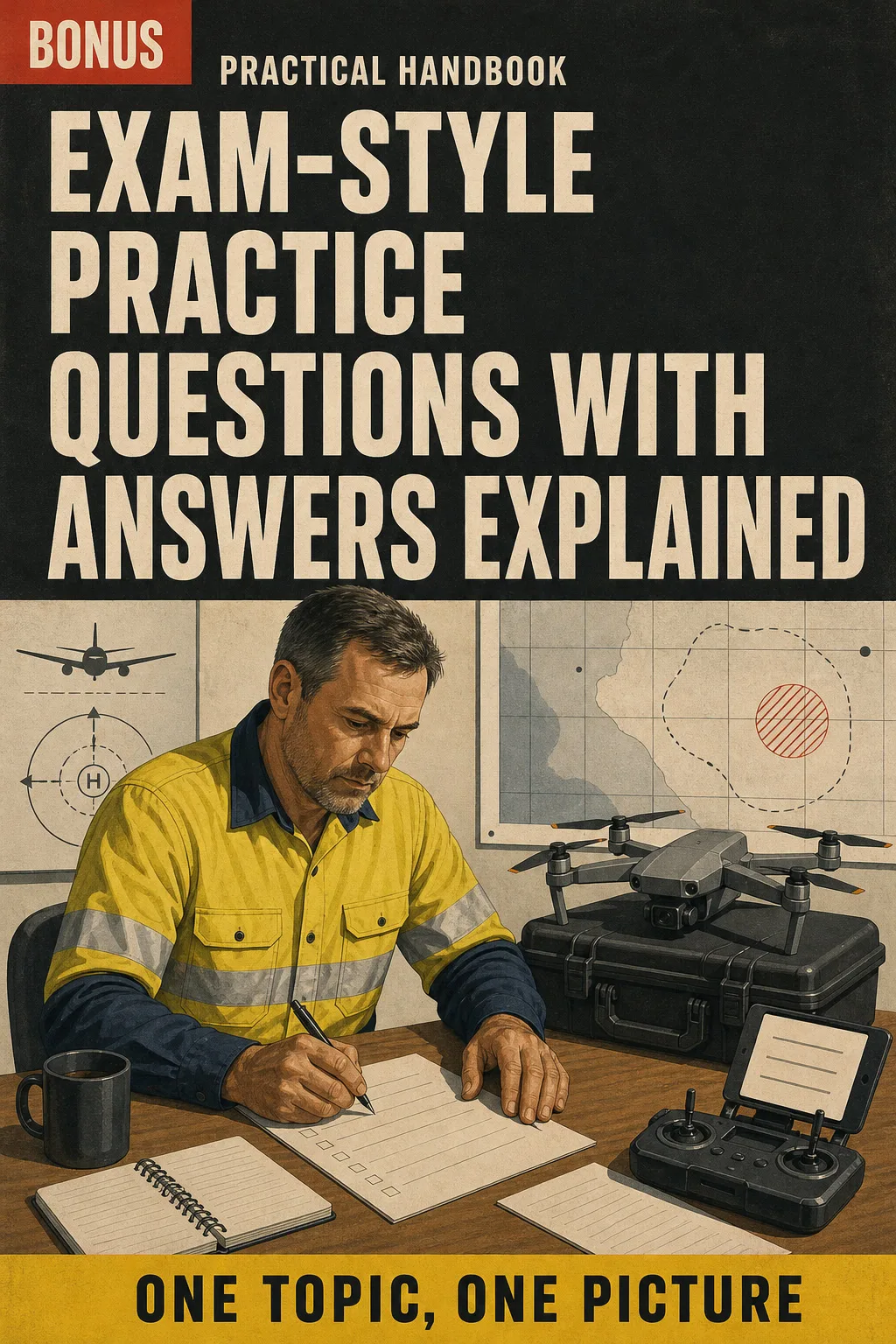
BONUS 1: «Exam-Style Practice Questions with Answers Explained»

Value on its own: US$ 17.90

Test yourself on rules, airspace, weather and emergencies, and see in one line why each answer is right, so you find the gaps before the theory exam.

15 Common Drone Pilot Mistakes: Before and After

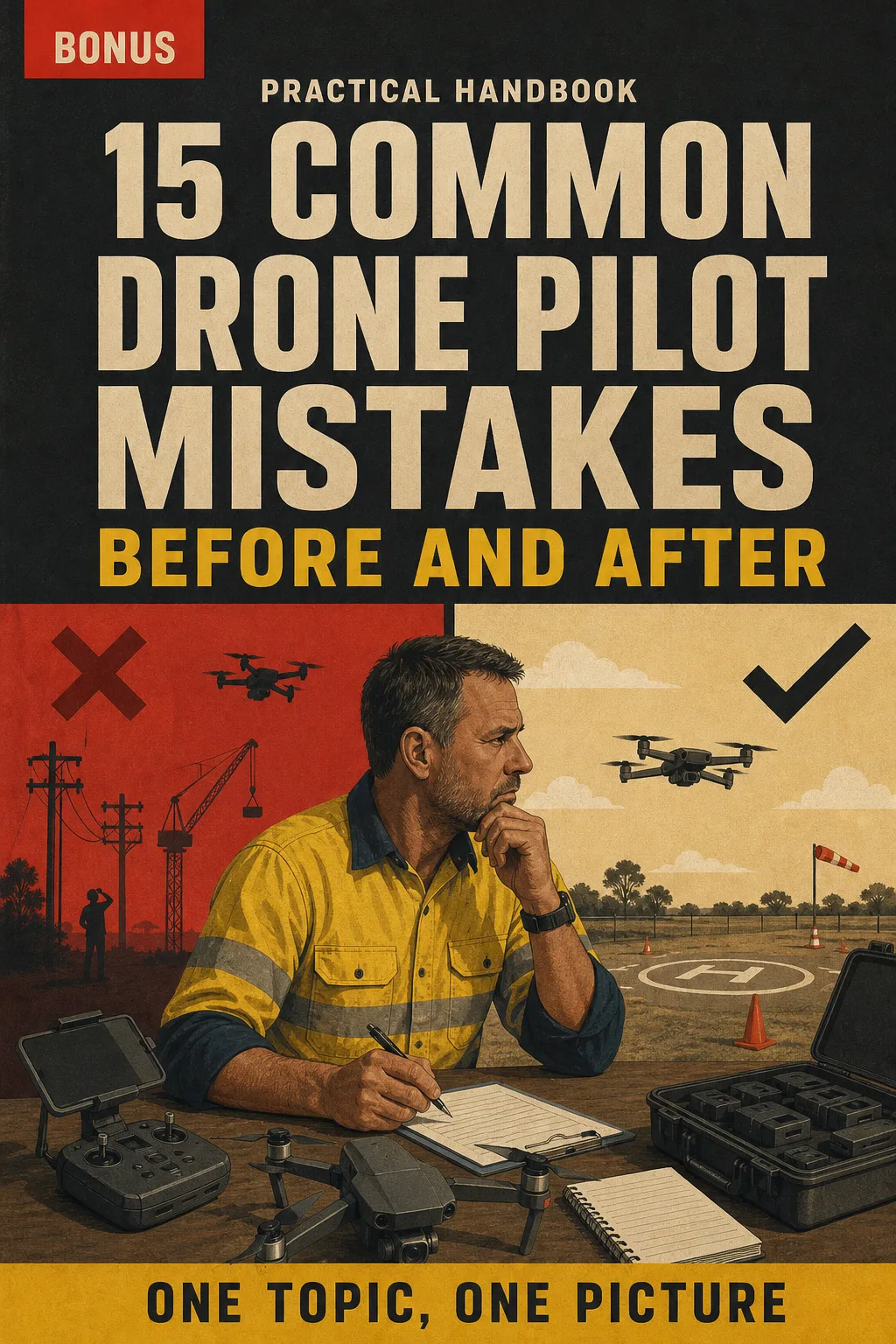
BONUS 2: «15 Common Drone Pilot Mistakes: Before and After»

Value on its own: US$ 14.90

The mistakes that show up most often in pre-flight checks, planning and emergencies, each drawn wrong and right on one page, for a quick review the night before.

Remote Pilot Licence Illustrated with 2 Free Books

  • Remote Pilot Licence Illustrated: 66 illustrated pagesUS$ 63
  • BONUS 1: Exam-Style Practice Questions with Answers ExplainedUS$ 17.90
  • BONUS 2: 15 Common Drone Pilot Mistakes: Before and AfterUS$ 14.90
  • High-resolution PDF to printIncluded
Total value US$ 95.80
YOUR PRICE:
US$ 27
You save US$ 68.80
YES, I WANT REMOTE PILOT LICENCE ILLUSTRATED FOR US$ 27

📄 This is a digital PDF book sent to your email: nothing is printed or shipped.

Secure purchaseEncrypted payment30-day guarantee

PDF by email: We email you Remote Pilot Licence Illustrated as a PDF, together with the two free books. It's a single payment: no installments, no extra charges.

Who This Book Is For

You're doing the RePL course

You're doing the RePL course

The theory you read at night has one drawing per topic, so rules, airspace and weather are already in order when the instructor covers them.

Your practical assessment is coming up

Your practical assessment is coming up

The pre-flight check, the manoeuvres and the simulated emergencies are numbered steps in the same order, ready to run through the night before.

You already fly for work

You already fly for work

Print it and keep it in the ute: the numbers, the METAR and the airspace steps at a glance before each job.

Everything You Get Today

US$ 95.80US$ 27
YES, I WANT REMOTE PILOT LICENCE ILLUSTRATED FOR US$ 27

📄 This is a digital PDF book sent to your email: nothing is printed or shipped.

30DAYS
GUARANTEE

30-Day Guarantee

Try Remote Pilot Licence Illustrated for 30 days, bonus books included.

We refund everything if the file won't open, if the book isn't what you see here, if you were charged twice or if the email doesn't arrive. Just email us.

You pay once. No subscriptions.

Frequently Asked Questions

Is it for me if I've been flying for years and now need my RePL?

Yes. It doesn't teach you to fly: it puts the rules, airspace, weather and procedures you'll be asked about in order, one drawing per topic.

Where does the content come from?

From the Civil Aviation Safety Regulations Part 101, the Part 101 Manual of Standards, current CASA guidance for remote pilots, the AIP and ERSA, and Bureau of Meteorology products. Australian rules, metric units.

Is this official material?

No. It's independent study material. It is not affiliated with or endorsed by CASA or any other organisation.

Does it replace the RePL course?

No. The course and the practical assessment are run by a certified training organisation. The book is there to study and review alongside it.

Are the practice questions the ones from the exam?

No. They're written for this book to help you check what you know. They are not official exam questions.

When and how do I get it?

The book and the 2 bonus books arrive as a PDF by email, at the address you enter when you pay.

Do I have to pay every month?

No. It's a one-off payment, with no subscription.

Can I have it on paper?

Yes. The PDF is printable, so you can print it at home or at a print shop and keep it in the ute or your flight case.

How does the refund work?

You have 30 days. We refund everything if the file won't open, if the book isn't what you see on this page, if you were charged twice or if the email doesn't arrive: just email us.

Before You Close This Page

No more rereading the manual with nothing sticking.

Airspace steps and the pre-flight check: you see them drawn, and that's it.

You turn up to the assessment knowing where everything is.

Drawings make studying faster.

The book is right below.

One-time payment: US$ 27 · Guarantee: 30 days · PDF by email

YES, I WANT REMOTE PILOT LICENCE ILLUSTRATED FOR US$ 27

📄 This is a digital PDF book sent to your email: nothing is printed or shipped.